
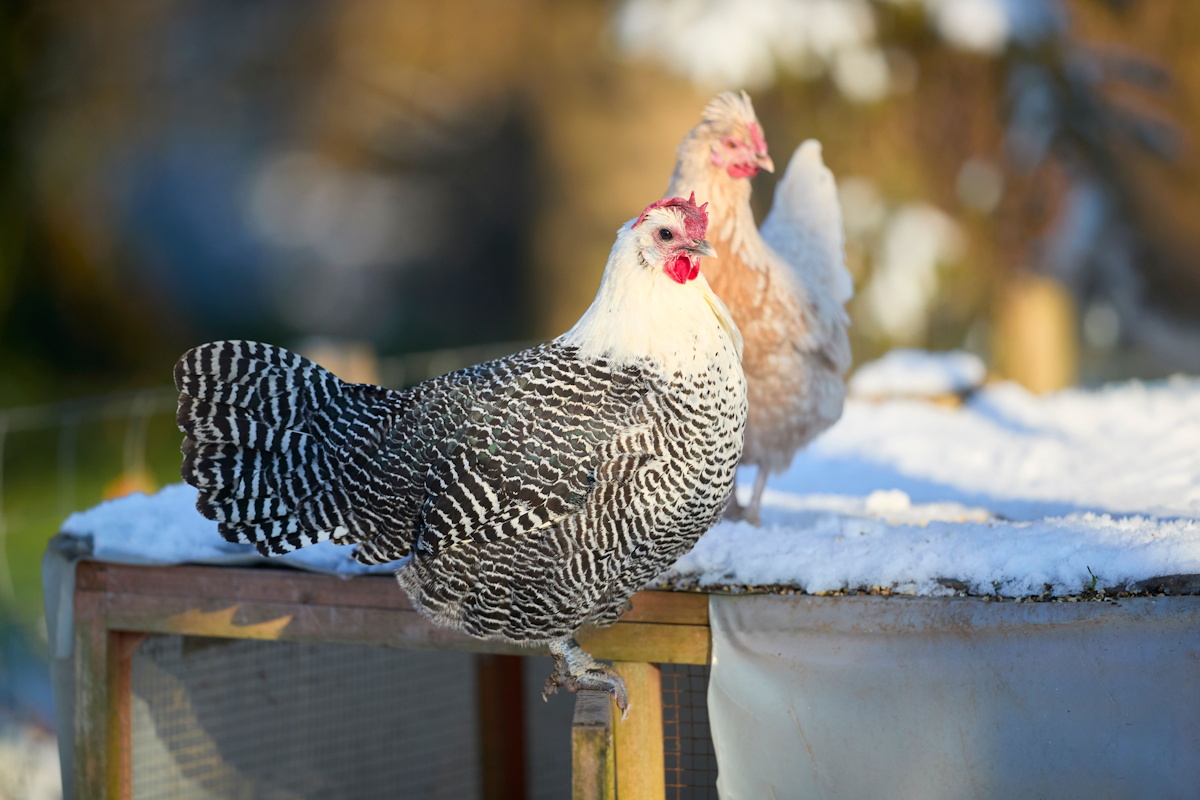
Most backyard chickens do not need a heater. A healthy adult flock in a dry, draft free coop with good ventilation handles a Vermont winter on its own, including nights well below zero. What they do need is water that is not frozen, a little more feed, and a coop that stays dry. Heat lamps are the most common cause of coop fires, so if you add heat at all, use a flat panel heater made for coops. Johnson Hardware & Rental in Johnson, VT carries heated waterers, Poulin feed, bedding and the rest of the winter list.
Do chickens need heat in winter?
No, not in most cases. Chickens wear a down coat. They fluff their feathers to trap warm air against their bodies, tuck their heads under a wing at night, and huddle on the roost. Standard breeds such as Rhode Island Reds, Plymouth Rocks, Wyandottes, Orpingtons and Australorps were bred for exactly this kind of weather.
Heat can do more harm than good. A warm coop and a cold run means the birds never adjust to the cold, and a power outage in January leaves a heated flock in trouble. Heat also adds moisture to the air, and moisture is what causes frostbite. The one real risk from heat is fire. Heat lamps hung in a dusty coop full of dry bedding and feathers start fires every winter in Vermont.
The exceptions are birds that cannot keep themselves warm: very young chicks, a sick or injured bird, a bird that is molting hard in deep cold, and breeds with big single combs or silkie type feathers that do not hold heat. For those, a flat panel radiant heater mounted on the wall, rated for coops and kept clear of bedding, is the safe option. We carry flat panel coop heaters along with the rest of our chicken supplies.
How cold is too cold for chickens?
A healthy adult flock in a dry coop is fine down to about zero and usually well below. Most Vermont keepers see their birds through stretches of ten and twenty below without heat. Trouble starts when cold combines with damp bedding, a draft at roost height, or a bird that is already weak, not from the number on the thermometer alone.
Watch the birds, not the forecast. Chickens that are eating, drinking, moving around and roosting normally are fine. A bird that stands hunched with feathers fluffed all day, stops eating, or stays off the roost needs a closer look and maybe a night in a crate in the garage or basement.
|
Temperature |
What to do |
|---|---|
|
Above 20 F |
Nothing special. Keep water thawed and bedding dry. |
|
0 to 20 F |
Check water twice a day. Add scratch in late afternoon. Make sure the roost is out of any draft. |
|
Below 0 F |
Check combs and feet each morning. Add bedding. Keep the pop door closed overnight. Watch large comb breeds for frostbite. |
|
Below minus 15 F with wind |
Keep birds in the coop. Consider a flat panel heater only for at risk birds. Never a heat lamp. |
How do I keep chicken water from freezing?
A heated waterer or a heated base under a metal waterer is the easiest fix. They plug in, hold the water a few degrees above freezing, and use little power. Plastic waterers go on a heated base made for plastic, and metal waterers go on a metal base. Keep the cord where birds cannot peck it and plug into an outdoor rated extension cord or a GFCI outlet.
If you do not have power at the coop, carry fresh water out twice a day, morning and late afternoon, and use rubber feed pans. Ice knocks out of a rubber pan with one tap, where a plastic waterer cracks. A pan of warm water in the morning gets the flock drinking before it freezes again. A ping pong ball floating in an open pan keeps a small patch open longer on milder days.
Chickens stop laying and lose condition fast without water, so this is the one winter chore that cannot slide. Heated waterers and bases are on the shelf in our chicken aisle.
Should I change feed in winter?
Keep your hens on layer feed. A good 16 percent layer feed covers everything they need, winter or summer. What changes is how much they eat. Cold birds burn more calories to stay warm, so expect the feeder to empty faster and keep it full.
Add scratch grains in the late afternoon, about a handful per bird. Digesting whole grains makes heat, so a scratch snack before roost time helps the birds stay warm through the night. Keep scratch to a treat, no more than a tenth of what they eat, because it is low in protein and will cut egg production if it replaces layer feed.
Johnson Hardware & Rental is a Poulin Grain dealer. Poulin layer feed and scratch are milled in Vermont for Vermont birds, and our staff can help you pick the right bag for your flock. If you are raising this year's chicks into layers, our starting chicks guide covers the switch from starter to layer.
How do I prevent frostbite on combs and wattles?
Keep the coop dry. Frostbite on combs, wattles and toes comes from moisture far more than from cold. Chickens put out a lot of water vapor breathing and in their droppings, and a sealed up coop traps all of it. Vents near the roof line, above the birds' heads, let the damp air out while the roost stays out of the draft.
A few more habits help:
-
Scoop droppings from under the roost every few days, or use a droppings board you can scrape in the morning.
-
Add dry bedding on top of the old in a deep litter setup. Pine shavings and chopped straw both work.
-
Use a wide, flat roost, a 2x4 with the wide side up, so the birds sit on their feet and cover them with feathers.
-
Pick up a bird each morning in a cold snap and look at the comb. Pale or gray tips mean frostbite is starting.
-
Some keepers rub petroleum jelly on large combs before a very cold night. It helps a little on dry combs and does nothing on wet ones.
Frostbitten tips will usually blacken and fall off without much harm to the bird. Keep an eye out for swelling or infection and separate the bird if the others pick at it.
What should the coop look like for winter?
Dry, ventilated and draft free. That sounds like a contradiction but it is not. Ventilation is air moving out through openings high on the walls or under the eaves. A draft is wind hitting the birds on the roost. Close up gaps at roost height and leave the high vents open all winter.
Bank snow or straw bales against the north side, keep the pop door closed on the coldest nights, and shovel a patch of the run and throw down straw so the birds will come out. Chickens dislike walking on snow and will stay cooped up all day otherwise. Winter is also a good time to hang a cabbage or a flock block to keep them busy and cut down on pecking. If you are new to all of this, our guide to homesteading in Vermont covers coop basics, and the homesteading supplies aisle has the bedding, fencing and feed pans.
Frequently asked questions
Do chickens need heat in winter? Usually not. A dry, draft free, ventilated coop is enough for healthy adult birds of standard breeds. Add a flat panel heater only for chicks, sick birds or at risk breeds, and never use a heat lamp.
How cold is too cold for chickens? Healthy adults are fine to zero and usually well below. Watch for hunched, fluffed birds that stop eating rather than a specific temperature.
How do I keep chicken water from freezing? Use a heated waterer or a heated base, or carry fresh water out twice a day in rubber pans you can knock the ice out of.
Should I change feed in winter? No. Stay on layer feed and keep the feeder full. Add a handful of scratch per bird in the late afternoon for extra warmth overnight.
How do I prevent frostbite? Keep the coop dry with vents above roost height, scoop droppings often, use a wide flat roost, and check combs each morning in a cold snap.
Why did my hens stop laying in winter? Shorter days, not cold. Hens need about 14 hours of light to lay. A low wattage bulb on a timer in the morning brings laying back, or let them rest until February.
A note from Johnson Hardware & Rental
Heated waterers and bases, Poulin layer feed and scratch, pine shavings, straw and flat panel coop heaters are all in the store at 1442 VT-15 in Johnson. Stop in Monday to Friday 7 to 5 or Saturday 8 to 4, or call (802) 635-7282 and we will check what is on the shelf.